

A Month-by-Month Survival Guide
Introduction: Your Year Map
Many startups do not end in one big crash. They often fade slowly. Money gets thin, energy gets low, and one day the founder stops answering customer messages. This book is about avoiding that slow fade.
Why the First Year Is So Hard
A startup is a new business that is still searching for a way to serve customers and earn money again and again. The key word is searching. You do not yet know who will buy, what price works, or how to reach people. Everything is a guess.
In the first year you have little money, little time, and no proof. Friends and family say “great idea!” but they do not pay. Costs start on day one, while sales come late. This is why the year needs a plan, even a simple one.
In Pakistan and across South Asia, many founders also carry extra pressure. Family expects a stable income. Relatives ask when the “real job” will start. Cash on delivery, late payments, and rising costs make planning harder. This book keeps those facts in mind.
The Four Phases
We split the first 365 days into four phases of three months each. Each phase has one main question. If you can answer it honestly, you are ready to move on. If you cannot, stay in the phase a little longer.
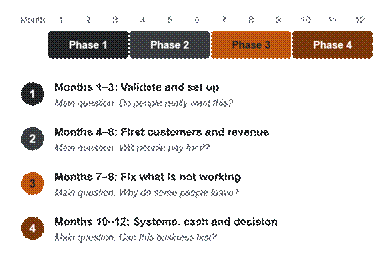
Figure 1. Your year map: four phases, four questions.
Chapters 1 and 2 cover Phase 1. Chapters 3 and 4 cover Phase 2. Chapter 5 covers Phase 3. Chapters 6 and 7 cover Phase 4. Chapter 8 looks at the biggest risks in every phase, so you can spot trouble early.
Three Founders You Will Meet
To keep things real, we follow three imagined founders. They are made-up people, and their numbers are examples to teach an idea. They are not real case studies.
- Hina lives in Lahore. She makes frozen snacks like samosas and kebabs at home and wants to sell them to busy families.
- Bilal lives in Karachi. He is building a simple tool that helps small shop owners track stock and customer credit (udhaar).
- Sana lives in Faisalabad. She sells ready-made kids’ clothes online through WhatsApp and Facebook.
Their businesses are different, but their problems are the same ones most new founders face: finding proof, finding customers, finding the right price, and staying alive long enough to learn.
What This Book Promises (and What It Does Not)
This book does not promise that you will get rich, or that your business will succeed. Nobody can promise that honestly. It promises something smaller and more useful: a clear path for each month, simple tools to make decisions, and a way to stop small mistakes from becoming big ones.
The most important goal of year one is to survive and learn. Morgan Housel, in The Psychology of Money, makes a similar point about money: staying in the game for a long time matters more than one big win. A founder who is still standing at day 365, with real lessons, has already won something.
How to Use This Book
- Read the chapter at the start of each phase. Do not rush ahead.
- Every chapter ends with three practical steps. Try at least one before you turn the page.
- Keep a Startup Notebook, on paper or on your phone. Write down numbers, names, and what you learned each week.
- Use the reflection questions with a partner, a mentor, or a trusted friend who will tell you the truth.
Where an idea comes from another author, it is credited in the text and in the Sources and Inspirations section at the end.
| PHASE 1 · MONTHS 1–3 01 Chapter 1: Test the Idea Before You Spend |
You have an idea. Your family says it is wonderful. Your best friend says, “Yaar, ye to chal jaye ga!” You feel ready to rent a shop, hire a developer, or order stock. Wait. Do these people know if strangers will pay? Or do they just love you?
Your Idea Is a Guess
Every new idea is a guess about the world. You guess that people have a problem. You guess that they care enough to pay. You guess that you can solve it better than what they use today.
Eric Ries, in The Lean Startup, says a startup should treat its plan as a set of guesses to be tested, not as facts. This is the best habit you can build in the first three months. Testing is cheap. Building the wrong thing is expensive.
There is a trap here. When we love our idea, we ask questions that make people say yes. People are polite, especially in our culture. They do not want to hurt you. So “nice idea” often means nothing. We need a better kind of proof.
The Evidence Ladder
Not all proof is equal. Think of five steps. The higher you climb, the stronger your proof. Many beginners stay on steps 1 and 2 and then spend real money. Try to reach step 4 or 5 before you spend much.
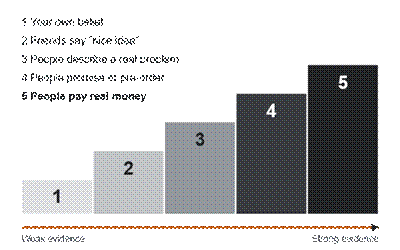
Figure 2. The evidence ladder: climb as high as you can before you spend big.
Step 1 is your own belief: “I think this is a good idea.” Step 2 is friends saying “nice idea”. Both are weak, because nobody has risked anything yet. Step 3 is where real learning starts. A person who describes the problem in their own words, with a story from last week, is showing you something real. Step 4 is stronger: a promise, a deposit, a sign-up with a phone number. Step 5 is the strongest: money in your hand.
How to Talk to People and Really Listen
Talk to ten to twenty people who truly have the problem. Do not only talk to family. Ask about their past behavior, not their future promises. People are poor at guessing what they will do. They are good at telling you what they did last week. This idea is explained in more detail in The Mom Test by Rob Fitzpatrick, a book worth reading.
Table 1. Better questions for customer talks
| Ask this | Not this |
| “Tell me about the last time you needed this.” | “Would you buy this?” |
| “What do you use today? What do you pay?” | “Do you like my idea?” |
| “What is the most annoying part?” | “Is this a good price?” |
| “Have you tried to fix this before? How?” | “Would you tell your friends?” |
Also watch the person, not just the words. Henrik Fexeus, in The Art of Reading Minds, reminds us that much of communication is not spoken. Notice when someone leans in, smiles, or starts talking faster. Notice when they go quiet or look at their phone. These signs show where the real energy is. Do not over-read a single sign, but do write down what you notice.
Where to Find People to Talk To
You do not need a research company. You need ten honest conversations. Here are easy places to start:
- Your own contacts: ask them to introduce you to someone who has the problem, not to say if your idea is good.
- WhatsApp and Facebook groups for mothers, students, shop owners, freelancers, or whoever your customer is. Read the group rules first and ask politely.
- Local markets and shops: stand near the place where the problem happens and talk to people for five minutes.
- People who already pay a competitor. They have proven that the problem is worth money to them.
Keep each talk short, ten to fifteen minutes. Say clearly that you are learning, not selling. Thank people at the end, and ask one last question: “Who else should I speak with?” That one question often gives you your next three talks.
Three Common Mistakes in Testing
Even careful founders slip here. Watch for these three.
- Selling instead of learning. If you talk for most of the conversation, you are pitching, and people will just be polite.
- Counting compliments as proof. “Nice idea” costs the speaker nothing. Money, time, or a promise costs something, so it is stronger.
- Testing with the wrong people. If your customer is a small shop owner, then a university friend is not a test. Match the test to the real buyer.
If your test shows weak proof, that is not a failure. It saves you money and months. You can change the idea, change the customer, or try a new problem. A cheap “no” in month 2 is far better than an expensive “no” in month 9.
Hina’s Samosa Test
Hina wanted to start a frozen snack business. Her first plan was to rent a small kitchen space and buy a large freezer. Instead, she did something cheaper.
First, she spoke with fifteen people: neighbours, colleagues, and women from a school WhatsApp group. She asked how they handled evening snacks and Ramadan preparation. Seven said they bought ready-made frozen snacks from shops, but complained that the taste was oily and the packs were too large. Three said they made everything at home and were exhausted by it.
Next, she posted a simple message on her WhatsApp status: a photo of her samosas, a small family pack, a price, and one line: “Pre-order for next week. Pay a small advance to reserve.” She spent nothing but her time.
Before posting, she had set her pass mark: three advance payments. Nine people messaged her, and four paid an advance. She passed her own test. She also learned two useful things: customers wanted smaller packs, and they cared more about “less oil” than about a low price. She did not rent the kitchen. She cooked at home, delivered the first orders herself, and kept her money safe.
 Try It: Three Practical Steps
| 1 | Write one sentence. Finish this line: “I help [who] to [solve what] by [how].” If you cannot, your idea is still too vague. |
| 2 | Talk to ten real people in two weeks. Choose people who actually have the problem. Use the questions in the table, and write down their exact words. |
| 3 | Run one cheap test. Try a pre-order, a waiting list, or a small paid trial. Decide your pass mark first and write it in your notebook. |
 Pause and Think
- Who have I only asked so far, and are they likely to tell me the truth?
- What is the cheapest way to get someone to pay or promise something this month?
- If my test fails, what would I be happy to learn from it?
| PHASE 1 · MONTHS 1–3 02 Chapter 2: Set Up the Basics |
Bilal spent his first two months choosing a logo, a fancy company name, and office furniture. By month three, his idea was still untested, and he could not tell how much of his bank balance was his money and how much belonged to the business. He had a beautiful setup and no clarity.
Keep the Setup Small
In the first three months, you need a small setup, not a big one. Big setups feel like progress, but they quietly burn cash and time. A logo will not find you customers. A rented office will not prove your idea. What you need is just enough structure to stay organized and honest with yourself.
Here is a simple rule: spend on things that help you learn or sell, and delay everything else. If a cost does not help you test your idea or serve a first customer, ask yourself if it can wait.
Separate Your Money from Day One
This is the most useful habit in the whole chapter. Keep business money and personal money apart. When they mix, you cannot answer simple questions like “Did I make a profit this month?” You may feel rich because your account has money, when much of it is owed to a supplier. Or you may feel poor when the business is actually healthy.
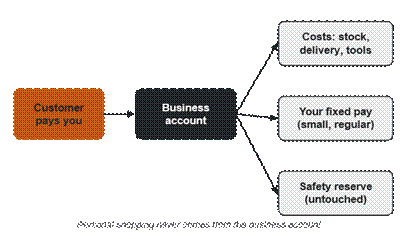
Figure 3. A simple money flow: every rupee from a customer goes to the business first.
Use the flow above. Customers pay into one business place: a separate bank account if you can open one, or at least a separate mobile wallet or a clearly marked account. From there, you pay costs first, then pay yourself a small, fixed amount, and move something into a safety reserve. Even a small reserve teaches the habit.
Robert Kiyosaki, in Rich Dad Poor Dad, makes a point worth remembering: what matters is not only how much money comes in, but how much you keep and where it goes. Tracking this from the start will make every later chapter easier.
Choosing a Simple Business Form
Many beginners ask, “Should I register a company now?” There is no single answer. Here are the three common options in simple words:
- Sole proprietorship: you run the business in your own name. It is the simplest, but you and the business are legally the same person.
- Partnership: two or more people share the business under an agreement.
- Private limited company: a separate legal body. It takes more paperwork and cost, but separates the business from you personally.
A good rule for the first months: do the minimum needed to operate honestly and safely, and ask a professional once, early, so you do not build on a weak base.
Working with a Partner or Team
Many startups begin with two or three friends. This can be a great strength, and also a quiet danger. Peter Thiel, in Zero to One, compares choosing co-founders to a marriage: the first decisions matter, and they are hard to undo. Friends often avoid talking about money and roles because it feels awkward. Do it early, while everyone is still happy.
Write a one-page agreement. It does not need legal words. It needs clear answers to five questions:
- Who does what, and who decides what?
- How many hours each week will each person give?
- How will money and profit be shared?
- What happens if someone wants to leave, or stops working?
- How will we settle disagreements?
Both of you should sign and keep a copy. A simple page like this is much better than nothing, but it may not be strong enough in court. If the business grows, or if real money is involved, ask a lawyer to turn it into a proper agreement.
The Tools You Really Need
New founders often think they need many apps and tools. In the first three months you need very few. A phone, WhatsApp Business, a notebook, and a simple spreadsheet cover most needs. You can take payments through bank transfer or a mobile wallet that your customers already use, such as Easypaisa or JazzCash. Check each service’s current fees and rules before you start. A website or a custom app can wait until you have proof that people want what you sell.
Before you pay for any tool, ask three questions:
- Will this help me learn from customers or serve them better this month?
- Can I do the same job with something free for now?
- If I stop using it next month, how much money have I lost?
If the answers are “no”, “yes”, and “a lot”, then wait. The best tool is the one you will actually use every week. A simple notebook that you open daily is better than an expensive dashboard that you forget.
Bilal Resets His Setup
In month three, Bilal stopped and made a short list. He opened a separate account for the business and moved only the money he planned to spend on the project into it. He paid himself nothing yet, but he wrote down his monthly personal costs, so he knew his real limit.
He then sat with his friend Hamza, who was helping him build the tool. They wrote a one-page agreement: Bilal would handle customers and money, Hamza would handle the software, each would give about fifteen hours a week, and profits would be shared after costs. They also wrote what would happen if either wanted to leave in the first year. The talk was uncomfortable for ten minutes. It saved them from a much worse talk later.
Table 2. Setup checklist for months 1–3
| Item | Why it helps | Cost |
| One-sentence promise | Keeps your focus clear | Free |
| Separate money place | Shows real profit and loss | Low |
| WhatsApp Business or phone line | One place for customers | Free |
| Simple money sheet | Tracks money in and out | Free |
| One-page partner agreement | Prevents later conflict | Free |
| Advice from an accountant or lawyer | Avoids costly setup mistakes | Some |
 Try It: Three Practical Steps
| 1 | Separate the money. Open or choose a business account or wallet this week, and move all business income and costs through it. |
| 2 | Write the partner page. Answer the five questions with your partner or family supporter, and both sign it. |
| 3 | Start a money sheet. One page: date, money in, money out, what it was for. Update it every week, even if the numbers are tiny. |
 Pause and Think
- What am I spending on right now that does not help me learn or sell?
- If I had to explain my business money to a stranger today, could I?
- Is there a hard talk with a partner that I have been avoiding?
| PHASE 2 · MONTHS 4–6 03 Chapter 3: Win Your First 10 Customers |
Sana made thirty kids’ dresses and posted nice photos on Facebook. She got two hundred likes and two orders. She felt confused. Everyone seemed to love the dresses, yet almost nobody bought. Likes are not customers. This chapter shows how to get real buyers, one by one.
Why Ten Is the Magic Number
Many founders want a thousand customers. The first goal should be ten. Ten is small enough that you can talk to each person, learn their story, and fix problems fast. Ten is big enough to show a pattern: who buys, why they buy, and what they complain about.
Peter Thiel, in Zero to One, suggests starting with a small market where you can truly win, then growing from there. Your first ten customers are that small market. They teach you more than a thousand views on social media.
At this stage, do things the slow, personal way. Startup investor Paul Graham calls this “doing things that don’t scale”. Send personal messages. Deliver in person. Call a customer to ask how it went. This takes time, but time is the one thing you have more of than money. Big companies cannot do this, and that is your advantage.
The Four Circles of Customers
Think of your possible customers as four circles, like ripples in water. Start in the middle and move outward only when the inner circle is working.
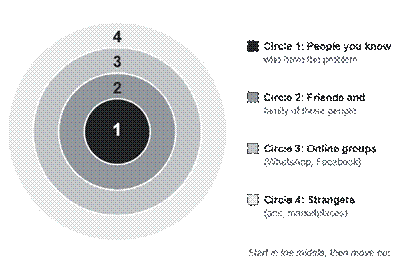
Figure 4. The four circles: start with people close to the problem, then move outward.
Circle 1 is people you know who truly have the problem. Circle 2 is their friends and family, reached through a warm introduction. Circle 3 is online groups and communities where your customer already gathers. Circle 4 is strangers, reached through paid ads or marketplaces. Circle 4 is the most costly and the least personal, so leave it for later.
Table 3. Where to look for early customers
| Place | Good for | Watch out for |
| WhatsApp contacts | Fast trust, quick replies | Do not spam your list |
| Facebook groups | Reaching a clear community | Group rules, self-promotion limits |
| Local shops or partners | Customers who already walk in | Fair sharing of margin |
| Marketplaces | Buyers who are ready to pay | Price wars and fees |
| Paid ads | Testing a message at scale | Spending before you know what works |
How to Ask Without Begging
Many young founders feel shy about selling. They think it is like begging. It is not. Selling is helping a person with a problem to make a decision. If your product truly helps, then telling people about it is a service.
Use short and clear messages. A good first message has four parts: a greeting, who you are, what you offer in one line, and one easy next step. For example:
Notice what is missing: long speeches, pressure, and big promises. Match the other person’s style. If they write short messages, reply short. If they like voice notes, send a voice note. Henrik Fexeus calls this building rapport, which simply means making the other person feel comfortable and understood.
Robert Kiyosaki also argues that learning to sell and communicate is one of the most valuable skills in business. Treat these first ten sales as your practice class, and be kind to yourself when you hear “no”. Most people do not answer, and that is normal.
Follow Up, and Keep Track
Many sales do not happen on the first message. People are busy. They forget, or they want to think. A polite follow-up after two or three days is not pushy. It is helpful, and it often turns a “maybe” into a “yes”.
To follow up well, you must remember who said what. Keep a simple customer list in your notebook or spreadsheet with five columns: name, how you found them, what they wanted, what you offered, and the next step with a date. Update it every day. This small habit turns random chats into a real sales process.
A useful rule is the three-touch rule. Message once, follow up once, and send one final friendly note. If there is still no answer, thank them and move on. Do not chase. Silence is also an answer, and you can learn from it: maybe your offer was unclear, or the timing was wrong.
When someone says “no”, ask politely, “May I ask what made you decide that?” Many people will tell you. One honest “no” can teach you more than five quiet “maybe” replies. Thank them, and keep the door open.
Sana’s First Ten
Sana stopped waiting for strangers on Facebook. She made a list of thirty mothers she knew: neighbours, cousins, and women from her child’s school WhatsApp group. Over three days she sent about ten personal messages a day, each with photos and a short offer for first customers.
Six mothers bought. After delivery, she asked each one three questions: Did the size fit? What would you change? Who else might like this? Four of them gave her names, and four of those people bought. Within five weeks she had her first ten customers, along with a clear list of what to fix: her size chart was confusing, and customers wanted a simple exchange rule.
She also asked two happy customers for a short photo and a line of feedback she could share. This was far stronger than her own posts, because it came from real mothers.
 Try It: Three Practical Steps
| 1 | Make a list of thirty names. Choose people who may have the problem or know someone who does. Write them in your notebook. |
| 2 | Send ten personal messages a day for three days. Each message should have a clear offer and one easy next step. Track who replies. |
| 3 | Ask three questions after each sale. What worked? What would you change? Who else should I speak to? Write the answers down. |
 Pause and Think
- Who are the thirty people I can contact this week without feeling fake?
- Which part of selling makes me uncomfortable, and what small step could help?
- What have my first customers told me that I have not acted on yet?
| PHASE 2 · MONTHS 4–6 04 Chapter 4: Price, Sell, and Earn Your First Rupee |
Hina sold forty boxes of samosas in one month. She felt proud, and her phone was full of happy messages. But at month end her purse was almost empty. She had priced her boxes by guessing what felt “fair”, and she had forgotten gas, packaging, delivery, and her helper’s pay. Selling a lot is not the same as earning.
Three Words You Must Know
Let us clear up three simple money words first.
- Revenue is all the money that comes in from sales.
- Cost is all the money you spend to make and sell your product.
- Profit is what is left after all costs. If costs are bigger than revenue, you have a loss.
A business can have high revenue and no profit at all. This is common in the first year. It happens when founders count only the big costs and forget the small ones, and when they pay nothing to themselves for their own time.
Price Is a Message, Not Just a Number
Price does two jobs. It must cover your costs and leave profit. It also tells the customer something about you. A very low price can say “cheap quality” or “this person may not last”. A very high price with no proof can say “not for me”. Your price should feel fair to the customer and safe for you.
There are two simple ways to think about price. The first is cost plus profit: add up all costs, then add the profit you need. This protects you from selling at a loss. The second is value: think about how much the problem is worth to the customer. A busy mother may happily pay more to save two hours of cooking before guests arrive. The right price usually sits between your minimum price and the value your customer sees.
Know Where Your Rupees Go
Take one sale and break it into pieces. This is the most eye-opening exercise in the first year. Here is where one box of Hina’s samosas went, when she sold it for Rs 1,500.
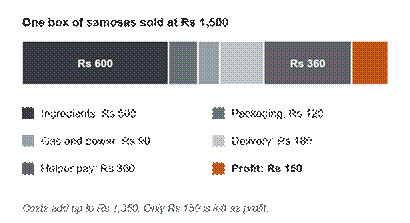
Figure 5. Where Rs 1,500 went: after costs, only Rs 150 was profit. (Example numbers.)
Hina thought she was making around Rs 780 on each box, because she only counted ingredients and packaging. In truth, her total cost was Rs 1,350, and her profit was Rs 150. Forty boxes meant Rs 6,000 of profit for the whole month, and that had to cover many other things.
Robert Kiyosaki writes that it is not how much you make, but how much you keep. This is exactly what the bar shows. Keep a list like this for every product you sell.
Three Simple Price Tests
You do not need to guess your price. You can test it, as the Lean Startup approach teaches: change one thing, watch what happens, and learn. Here are three easy tests.
Table 4. Simple ways to test a price
| Test | How it works | Good for |
| Two prices | Offer Price A to half of new customers and Price B to the other half | Finding what people accept |
| Good, better, best | Offer three versions, such as small, regular, and family size | Raising the average sale |
| Small step up | Raise the price a little for new customers only | Checking if you are too cheap |
Change prices for new customers first. Do not surprise your first loyal customers. If you do raise a price, explain what customers get for it, such as better packaging, faster delivery, or a guarantee.
A Simple Sales Routine
Good selling follows a pattern. You can use these six steps for almost any small business, and you can practise them until they feel natural:
- Understand. Ask what the person needs and by when.
- Offer. Suggest one clear option with a clear price. Too many choices confuse people.
- Answer doubts. Ask what worries them, and answer honestly. Do not hide weak points.
- Ask for payment. Say how to pay, and by when. Many sales are lost because nobody asked.
- Deliver well. Do what you promised, on time, and check that the customer is happy.
- Follow up. A short message a few days later builds trust and brings repeat orders.
Record every sale in your money sheet on the same day: date, customer, what they bought, price, and costs. Be careful with discounts. A discount of 10 percent does not reduce your profit by 10 percent. It can reduce it by much more, because your costs stay the same. Before you offer a discount, check what it does to your profit per sale.
Hina Fixes Her Price
Hina wrote her real costs in a notebook and saw the Rs 150 profit. She had three options: cut costs, raise the price, or do both. She started with small cost changes: she bought ingredients in bulk from a trusted supplier and changed the box so that it was lighter. Then she tested a new price of Rs 1,700 on new customers only.
Some people hesitated, and she lost a few orders. But the customers who stayed said the taste and the “less oil” promise mattered more to them than the extra Rs 200. In the next month she sold thirty-six boxes at Rs 1,700, and her costs had fallen by about Rs 50 a box, so her profit per box was about Rs 400. That is about Rs 14,400 of profit instead of Rs 6,000, with fewer boxes to cook.
This is an imagined example, and your results will differ. Sometimes a price rise loses too many customers, and then you learn that your product needs a stronger reason to cost more. Either answer is useful.
 Try It: Three Practical Steps
| 1 | List every cost of one sale. Include ingredients or stock, packaging, delivery, fees, helper pay, and a fair value for your own time. |
| 2 | Set your minimum price. Add the profit you need to the total cost. Never sell below this on purpose. |
| 3 | Test one price change. Try a small increase or a new package for new customers for two weeks, and record the results. |
 Pause and Think
- If I sell ten more units tomorrow, will I earn more money or just do more work?
- What do my customers get from me that is worth a higher price?
- Which cost have I been ignoring because it feels small?
| PHASE 3 · MONTHS 7–9 05 Chapter 5: Fix What Is Not Working |
It is month seven. The first excitement has gone. You still work hard, but sales are flat, and some customers have stopped replying. Bilal has twelve shops paying a small monthly fee for his stock tool, but only four open it every week. He wonders, “Is the idea wrong? Am I wrong? Or do I just need more marketing?”
Stop Guessing, Start Diagnosing
When a business is not working, we usually reach for the nearest cure: more ads, a new logo, a lower price. This is like taking medicine without finding the illness. A better way is to look at the whole customer journey and find where people drop off.
A funnel is the path a customer takes, from hearing about you to buying again. Think of four steps: people hear about you, they show interest, they buy once, and they come back. At each step, some people leave. That is normal. The question is where you lose the most.
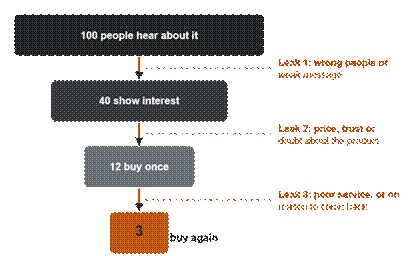
Figure 6. A leaky funnel: the biggest leak is the best place to start. (Example numbers.)
In this example, 60 of 100 people never show interest, and 28 of the 40 who do show interest never buy. But the last step is the worst: 9 out of 12 first-time buyers never come back. That is the biggest share lost, and it points to service, quality, or no reason to return, and not to the number of visitors. More ads would only pour more water into a leaky bucket.
This is the heart of the Build-Measure-Learn loop from Eric Ries’s The Lean Startup: make one change, measure the result, and learn from it. Fix one leak at a time, so you know what worked.
Numbers That Matter, Numbers That Do Not
Ries warns about vanity metrics. These are numbers that look good but do not guide action, such as total followers or total app downloads. They go up and make us feel nice, even when the business is stuck. Look for numbers that show real behavior: how many people bought, how many bought again, how often customers use the product, and how much profit each sale leaves.
Table 5. From symptom to test
| What you see | Likely cause | What to test |
| Many views, few messages | Weak message or wrong audience | Change the offer line and the photos |
| Many questions, few buyers | Price, trust, or doubt | Add proof, a guarantee, or a smaller first pack |
| Buyers do not return | Quality, service, or no reminder | Call 5 customers and ask why |
| Users sign up but do not use it | Product is hard or not useful | Watch one person use it, without helping |
Listen to the Customers Who Left
The best information comes from customers who stopped buying or using your product. They are often more honest than happy customers. Call or message five of them. Do not defend yourself. Say, “I am trying to improve. What made you stop?” Then listen.
Use the Five Whys idea, which the Lean Startup book borrows from Toyota: keep asking “why?” until you reach the root cause. A shop owner says, “I stopped using it.” Why? “It took too long.” Why? “I had to type everything.” Why? “I am busy and my customers are waiting.” Now you have a real problem to solve. As Henrik Fexeus teaches, pay attention to tone and pauses. If someone hesitates before an answer, there may be more behind it.
Small Pivots Before Big Ones
A pivot is a planned change in direction based on what you learned. It does not mean you failed. Many pivots are small. You can change who you serve, what problem you solve, how you price, or where you sell. Change one thing, and test it for three to four weeks. This is your Month 9 review: decide to keep, change, or pivot small, based on your results.
Do not pivot because of one bad week. Also do not refuse to change because you are proud of your first plan. Ego is the quiet enemy here. If the numbers say something painful, believe the numbers. Being wrong about an idea does not make you a wrong person.
Fix or Pivot? Three Questions
When results are weak, the hardest question is whether to fix the details or change direction. Three simple questions can help you decide.
- Do real people have this problem often and feel it strongly? If no, you may need a new problem or a new customer group.
- Do the people who try your solution say it helps them? If no, you may need to change the product or how it works.
- Can you reach these people at a cost that makes sense? If no, you may need a new way to sell or a new price.
If the answers to the first two are “yes” and only the third is “no”, you probably need a smaller fix: a new channel, a new message, or a new price. If the first answer is “no”, that is a deeper signal, and you should return to the evidence ladder from Chapter 1. This simple check protects you from changing everything when only one thing is broken.
Bilal Calls Eight Shop Owners
Bilal called eight of his twelve shop owners, including the four active ones. Seven said the same thing: typing every sale on a phone was slow, and customers were waiting. The tool was useful, but it did not fit a busy shop counter.
Instead of adding new features, he made one change. Owners could now send a quick voice note or a photo of the bill to a special WhatsApp number. At first, Bilal and Hamza typed the details into the tool themselves at the end of each day. It was slow work and it did not scale, but it showed whether shop owners would really use this way of working. After a month, nine of the twelve shops were using it weekly. Only then did they think about making the process automatic. The lesson: listen, fix one thing, and measure again.
 Try It: Three Practical Steps
| 1 | Draw your own funnel. Write real numbers for hear, interest, first purchase, and repeat purchase for the last 60 days. |
| 2 | Speak to five people who stopped. Ask what made them stop, and keep asking why until you find the root cause. |
| 3 | Pick one fix and run it for 3 to 4 weeks. Write the change, the expected result, and the date you will check. |
 Pause and Think
- Which number am I afraid to look at, and why?
- What have customers told me more than once that I keep ignoring?
- What is the smallest change that could improve my biggest leak?
| PHASE 4 · MONTHS 10–12 06 Chapter 6: Build Simple Systems and Protect Your Cash |
Sana’s orders are growing. She is busy all day, but she feels tired and short of money at the same time. A supplier is asking for payment, and the courier company has not yet sent the cash from last week’s deliveries. How can a business be busy and broke at once?
Profit Is on Paper, Cash Is Real
Profit is what you earn on paper after costs. Cash is the money you actually have in hand or in the bank today. They are not the same, because of timing. You may sell a large order today, but the customer pays in two weeks, or the courier sends the money after a delay. Meanwhile, you must pay your supplier now.
Some businesses that make a profit still fail, because they run out of cash at a bad moment. Cash on delivery and late payments are common in many South Asian markets, so this risk is real. That is why, in the last quarter of year one, you must learn to watch cash every week.
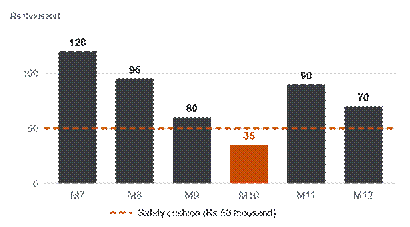
Figure 7. Month-end cash in a growing business. One month dips below the safety cushion. (Example numbers.)
Look at month 10 in the chart. Sales were still growing. But a large supplier payment and late customer money pushed the cash below the safety line. The business was not failing, but it was one surprise away from trouble.
Runway and the Safety Cushion
Runway tells you how many months you can keep going if no new money comes in. The simple formula is:
A safety cushion is cash you keep aside for surprises: a late payment, a broken machine, a sick month. Morgan Housel calls this a margin of safety in The Psychology of Money: a buffer so that you can survive when your guesses are wrong. A common rule of thumb is to aim for a cushion of a few months of basic costs, but choose a number that is honest for your business and your family situation. Build it slowly, even in small amounts.
Also remember that borrowing is not free money. Interest is the price you pay for using someone else’s money. Costs also change over time as prices rise, so check your costs and prices again every few months.
Systems: Make Good Work Repeat
By now, your business probably lives in your head. That works for ten customers. It breaks at fifty. A system is simply a repeatable way of doing a task so that it does not depend on your mood or memory. James Clear, in Atomic Habits, says that we do not rise to the level of our goals, we fall to the level of our systems. Small routines done every week beat big plans done once.
Start with the three tasks you repeat most: taking an order, delivering it, and collecting payment. Write each as a short checklist of five to eight steps. Then build a weekly rhythm.
Table 6. A simple weekly rhythm
| Day | Task | What to check |
| Monday | Plan the week | Orders due, supplier payments due, deliveries |
| Wednesday | Customer check | Call or message two customers for feedback |
| Friday | Money meeting | Update the cash sheet and chase late payments |
| Sunday | Reset | Rest, then write three goals for next week |
Cash Habits for a Cash-on-Delivery World
If you sell with cash on delivery, your money passes through other hands before it reaches you. Courier companies may take days or weeks to send it. Mistakes and returns also happen. A few habits keep this under control:
- Check every courier statement against your own order list, and note any missing amounts the same week.
- Ask for a part-payment in advance for large or custom orders, so you are not carrying all the risk.
- Agree on payment terms with suppliers in writing, and try to pay in parts when you can.
- Keep receipts and notes for every payment, in or out. Memory is a weak record.
- Send a polite reminder before a payment is due, not only after it is late.
None of these needs special software. They need a weekly habit, which is why the Friday money meeting is so important.
Sana Puts Her Cash in Order
Sana built a one-page cash sheet. Each Friday she wrote the opening cash, money received, money paid, and closing cash. She added one more line: money I expect to receive next week and money I must pay next week. For the first time, she saw that the courier’s delay created a hole every month.
She made three changes. She asked her fabric supplier for payment in two parts instead of one. She asked customers who ordered in bulk for a small advance. And she put a small amount aside every week for a safety cushion, even Rs 2,000 on a bad week. After two months, month-end cash stopped swinging so sharply.
Table 7. A simple weekly cash sheet
| Item | Week 1 | Week 2 | Week 3 |
| Opening cash | ___ | ___ | ___ |
| Money received | ___ | ___ | ___ |
| Money paid out | ___ | ___ | ___ |
| Closing cash | ___ | ___ | ___ |
 Try It: Three Practical Steps
| 1 | Make a one-page cash sheet. Update it every Friday: cash in, cash out, closing cash, and what you expect next week. |
| 2 | Write checklists for your top three tasks. Take orders, deliver, and collect payment. Keep each one under eight steps. |
| 3 | Set a safety cushion target. Choose a realistic amount, and move a small sum into it every week. |
 Pause and Think
- If no money came in for two months, how long could I last?
- Which task do I do from memory that I should write down?
- Where does timing hurt my cash the most, and how could I change it?
| PHASE 4 · MONTHS 10–12 07 Chapter 7: The Month-12 Decision Point |
A year has passed. You are tired, wiser, and maybe a little scared. Everyone asks, “So, how is the business?” Inside, you are asking a different question: “Should I continue?” Many people carry on out of habit, or quit out of tiredness. This chapter helps you decide with a clear head.
Four Roads, Not Two
People often think the choice is only continue or quit. In real life there are four roads.
- Continue: keep going, with the same plan and a clear next goal.
- Pivot: change who you serve, what you offer, or how you earn, based on what you learned.
- Shrink or pause: make the business smaller, seasonal, or part-time while you keep your income safe.
- Stop: close it down in a proper way, and keep the lessons, the skills, and the relationships.
Stopping is not a shameful word. A well-closed business protects your money, your name, and your family. The skills you built, such as selling, pricing, and managing cash, will help you in a job or your next business. What hurts most is not stopping, but dragging on for years with no plan.
The Month-12 Scorecard
Feelings change by the hour. Numbers and honest answers are steadier. Score each question below from 0 to 2, where 0 means “no”, 1 means “partly”, and 2 means “yes”. Be honest. Ask someone who knows you to review your scores.
Table 8. Month-12 scorecard
| Question | Where to look | Score |
| Do customers come back or send friends? | Repeat orders, referrals | 0 / 1 / 2 |
| Does each sale leave profit after all costs? | Cost sheet from Chapter 4 | 0 / 1 / 2 |
| Is demand growing, even slowly? | Last 3 months of sales | 0 / 1 / 2 |
| Do I have 3 or more months of runway? | Cash sheet from Chapter 6 | 0 / 1 / 2 |
| Do I still have the energy and support to continue? | Honest talk with yourself | 0 / 1 / 2 |
| Have I learned something that could improve the next 6 months? | Startup Notebook | 0 / 1 / 2 |
This is a guide, not a rule. As a rough reading: a total of 9 to 12 points suggests you may continue with focus. A total of 5 to 8 points suggests you pivot, shrink, or fix one key area first. A total of 0 to 4 points means you should seriously consider pausing or stopping. A very low score on cash or energy deserves extra attention, even when the total looks fine.
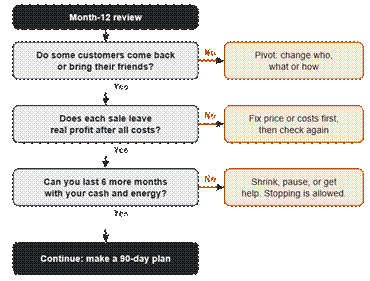
Figure 8. A decision path for month 12: three questions, four possible roads.
Keep Ego and Fear Out of the Room
Two things spoil big decisions: ego and fear. Ego says, “I cannot stop now, what will people say?” Fear says, “I cannot keep going, it is too risky.” Both are loud, and neither is a good adviser.
Morgan Housel points out that we are poor at predicting our future selves, and that we should not let sunk costs keep us tied to something we no longer want. A sunk cost is money or time already spent that you cannot get back. It should not be a reason to continue. Ask instead: “Knowing what I know today, would I start this business again, in this form?”
Robert Greene, in The 48 Laws of Power, urges readers to think through every move to the end and to consider the results before acting. In plain words: before you decide, imagine what life looks like six months after each road. Write it down for all four roads. The pictures often make the right answer clearer.
If You Decide to Stop, Stop Well
If your honest answer is to stop, do it with care. A good ending protects your money, your name, and your future options. Here is a simple checklist to adapt to your situation:
- List what you owe and what is owed to you. Make a plan to pay people fairly.
- Tell customers and suppliers clearly and politely, and finish open orders.
- Sell or use remaining stock and equipment in a sensible way.
- Keep your records, because you may need them later for tax or for your next project.
- Ask an accountant or lawyer how to close the business properly in your situation.
- Write down the lessons: what worked, what failed, and what you would do differently.
Then give yourself time. Many people feel sad or ashamed after closing a business. This is natural. You tried something real, and you now know more than most people who only dreamed about it. Your next step, whether a job or a new idea, will start from a stronger place.
Hina Chooses a Smaller Road
Hina filled in the scorecard and scored 8 out of 12. Her customers came back, and each box left healthy profit. But her energy score was zero: cooking every day, delivering, and answering messages had exhausted her, and her family was worried.
She spoke with her husband and a mentor from her neighbourhood. Together they found a fourth road. Hina decided to sell in a smaller way for the next quarter. She would take orders only for weekends and for special times like Ramadan and weddings. She would raise her price for rush orders. She also hired one part-time helper for packing and delivery.
She wrote three numbers for the next 90 days: a profit target, a number of repeat customers, and the hours she was willing to work. She set a date to review them. This was not quitting and it was not pushing on blindly. It was a clear choice, made on purpose.
 Try It: Three Practical Steps
| 1 | Fill in the scorecard honestly. Use your real numbers from Chapters 4 and 6, and give a copy to a trusted person. |
| 2 | Talk to an honest adviser. Choose someone who will challenge you kindly, and ask them to tell you what they see. |
| 3 | Write a 90-day plan for the road you choose. Include three numbers to reach, one thing to stop doing, and a date to review. |
 Pause and Think
- If I were advising a friend with my exact numbers, what would I say?
- Am I continuing because of facts, or because I fear what others will say?
- What would make me feel proud of my decision a year from now?
| ALL PHASES 08 Chapter 8: The Biggest Risks in Each Phase |
A map is useful, but roads have potholes. Every phase of the first year has its own dangers. Most are not secret. They are the same traps again and again, and knowing them early gives you time to step around them.
How to Think About Risk
Risk is the chance that something goes wrong, multiplied by how badly it hurts. Some risks are small and can be fixed in a day. Others can end the business. The aim is not to remove all risk. That is impossible. The aim is to avoid the risks that can finish you.
Morgan Housel puts it simply: survival comes first. Staying in the game long enough to learn is the main strategy. So ask of every decision: “If this goes wrong, can I still continue tomorrow?” If the answer is no, think twice or find a smaller way to test it.
A useful tool is the pre-mortem. The idea comes from psychologist Gary Klein. Before you start a big step, imagine it is six months later and the plan has failed. Write down the reasons. Because you are imagining the failure, people speak freely, and you will often find a problem that you could fix today.
The Risk Map
Risks fall into four groups: money (running out of cash), people (partners, team, family), market (customers do not want it enough), and mind (ego, fear, tiredness). The map below shows where each group tends to be strongest. It is a guide drawn from common patterns, not from measured data, so use it as a conversation starter.
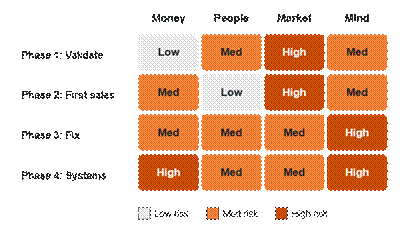
Figure 9. The risk map: which risks tend to be strongest in each phase. (A guide, not data.)
Notice the pattern. Early on, market risk is highest: you do not yet know if people want what you offer. Later, money and mind risks grow. Cash gets tight, and tiredness and fear grow with it.
Phase by Phase: Warning Signs and First Response
Table 9. Biggest risks and first responses
| Phase | Biggest risk | Warning sign | First response |
| 1: Validate and set up | Loving the idea; overspending on setup | Spending before any proof | Run a cheap test with a pass mark |
| 2: First customers and revenue | Free forever; underpricing; one customer | Busy but no profit | List costs; set a minimum price |
| 3: Fix what is not working | Hiding from numbers; changing everything | Avoiding your sales sheet | Diagnose one leak; call lost customers |
| 4: Systems, cash, decision | Cash crunch; burnout; delay | Late payments; always tired | Weekly cash sheet; scorecard; 90-day plan |
Risks from Outside
Some risks come from outside your business. Prices of materials can rise. A supplier may fail to deliver. A rule or a fee may change. A social media account may be blocked, or a platform may change how it works. The power may go out on your busiest day. You cannot control these things, but you can soften them.
- Do not depend on one supplier. Keep at least one backup, even if you use it rarely.
- Do not depend on one channel. If all your customers come from one page or one group, build a second way to reach them, such as a customer list on WhatsApp.
- Do not depend on one customer. If one buyer is a large share of your income, treat it as a warning sign.
- Keep a small buffer of stock, time, and cash, so that one surprise does not stop you.
This is the same idea as the safety cushion in Chapter 6, applied to the whole business. Many small protections cost little, and together they can keep you alive through a bad month.
The Risk That Runs Through Every Phase: You
Founders are tired people. Long hours, family pressure, and uncertain income can wear anyone down. When you are very tired, you decide badly, you avoid hard numbers, and you snap at people who are trying to help.
James Clear’s idea of building small, steady routines applies here. Protect basic habits: sleep, meals, a short walk, time with family. If you miss a day, do not miss twice. A tired founder is a business risk, so rest is part of the plan, not a reward for later.
Isolation is also dangerous. Find one or two people who understand what you are doing, such as another founder, a mentor, or an honest friend, and talk to them regularly. If you feel very low or hopeless for many weeks, please speak to a doctor or someone you trust. That is a health matter, and this book cannot give medical advice.
Bilal and Hamza Run a Pre-Mortem
At the start of their second year, Bilal and Hamza sat down for thirty minutes. They said, “Imagine it is next June, and our business has failed. Why?” They wrote six reasons. Three stood out: they depended on only two big shops for most income; they had no written plan for cash; and Hamza was working a full-time job and getting exhausted.
They set tripwires: simple rules that trigger action. If one customer made up more than a third of income, they would spend a week finding new customers. If cash fell below two months of costs, they would stop new spending. If either partner worked more than a set number of hours for three weeks, they would review the workload together. It took thirty minutes, and it replaced vague worry with clear actions.
 Try It: Three Practical Steps
| 1 | Run a 30-minute pre-mortem. With a partner or friend, write six reasons your business could fail next year. |
| 2 | Set three tripwires. Choose one for cash, one for customers, and one for your energy. Write the action for each. |
| 3 | Name a challenge partner. Pick one person who will ask you hard questions once a month, and book the first meeting. |
 Pause and Think
- Which risk on the map worries me most right now, and what is one small step against it?
- Who do I talk to when I feel overwhelmed?
- What would I regret not checking today?
Conclusion and 12-Month Action Plan
Day 366 is a quiet kind of victory. If you are still learning, still serving customers, and still honest about your numbers, you have done something most people only talk about.
This book followed a simple path. First, test your idea before you spend. Then set up the basics in a small and honest way. Win your first ten customers, and learn what price works. Fix the biggest leak, protect your cash, and build simple systems. At month twelve, decide with facts, not with fear or pride. Along the way, watch for the risks that each phase brings.
No book can promise your results. Markets change, people change, and luck plays a part. What you can control is your habits: how often you talk to customers, how honestly you look at numbers, and how quickly you fix problems. Those habits will serve you in any business, and in any job.
Your 12-Month Action Plan
The chapters give you the ideas for each phase. This table turns them into a month-by-month checklist. Print it, or copy it into your Startup Notebook. Change it to fit your business, but keep the order.
Table 10. Your 12-month action plan
| Month | Focus | Finish this |
| 1 | Idea and people | One-sentence idea; ten real conversations |
| 2 | Cheap test | Run one test with a pass mark |
| 3 | Set up basics | Separate money; one-page partner agreement |
| 4 | First offers | List of thirty names; personal messages sent |
| 5 | First ten customers | Ten buyers; feedback collected |
| 6 | Price | Cost of one sale; minimum price; one price test |
| 7 | Diagnose | Funnel with real numbers; five lost-customer calls |
| 8 | Fix one leak | One change, measured for 3 to 4 weeks |
| 9 | Review | Keep, change, or pivot small, based on results |
| 10 | Cash | Weekly cash sheet; safety cushion target |
| 11 | Systems | Three checklists; weekly rhythm in place |
| 12 | Decide | Scorecard; 90-day plan; review date |
Remember the three founders. Hina chose a smaller road, Bilal chose to focus, and Sana chose to protect her cash. Their paths were different, and each was right for them. Yours will be different too.
Start small. Start this week. And do not forget to be kind to yourself, because building a business is a long walk, and no one does it perfectly.
Sources and Inspirations
This book is original in its structure, examples, charts, and wording. Its ideas were inspired by the books and authors below. If you want to go deeper, please read the original books. Any mistakes in this book are my own.
- The Lean Startup by Eric Ries: testing ideas, building the smallest version, measuring real behavior, vanity metrics, the Five Whys, and pivoting.
- Zero to One by Peter Thiel with Blake Masters: starting with a small market, the importance of foundations, and choosing co-founders with care.
- The Psychology of Money by Morgan Housel: survival first, margin of safety, sunk costs, and how people change.
- Atomic Habits by James Clear: systems over goals, small routines, and never missing twice.
- Rich Dad Poor Dad by Robert T. Kiyosaki: the difference between income and what you keep, and the value of sales and communication skills.
- The 48 Laws of Power by Robert Greene: thinking through the end of a plan before acting.
- The Art of Reading Minds by Henrik Fexeus: noticing non-verbal signals, building rapport, and listening closely.
- The Mom Test by Rob Fitzpatrick: asking about past behavior, and why compliments are not proof.
- Paul Graham and Gary Klein: the essay “Do Things That Don’t Scale”, and the pre-mortem idea.
About the Author
Muhammad Abiyan Noori writes about money, power, mindset, success, freedom, motivation, psychology, and habits for beginners and young entrepreneurs in Pakistan and South Asia. His goal is to explain big ideas in simple English, with examples from everyday life.
Learn more and read free lessons at abiyanverse.com.